
Difficulty sleeping does not necessarily mean someone has an insomnia disorder. Temporary sleep disturbance is common during periods of stress, illness, grief, travel, or significant life change. The distinction becomes important when sleep difficulties persist despite adequate opportunity for sleep and begin affecting daytime functioning.
At that point, insomnia may no longer be simply a symptom of circumstance, but a disorder in its own right.
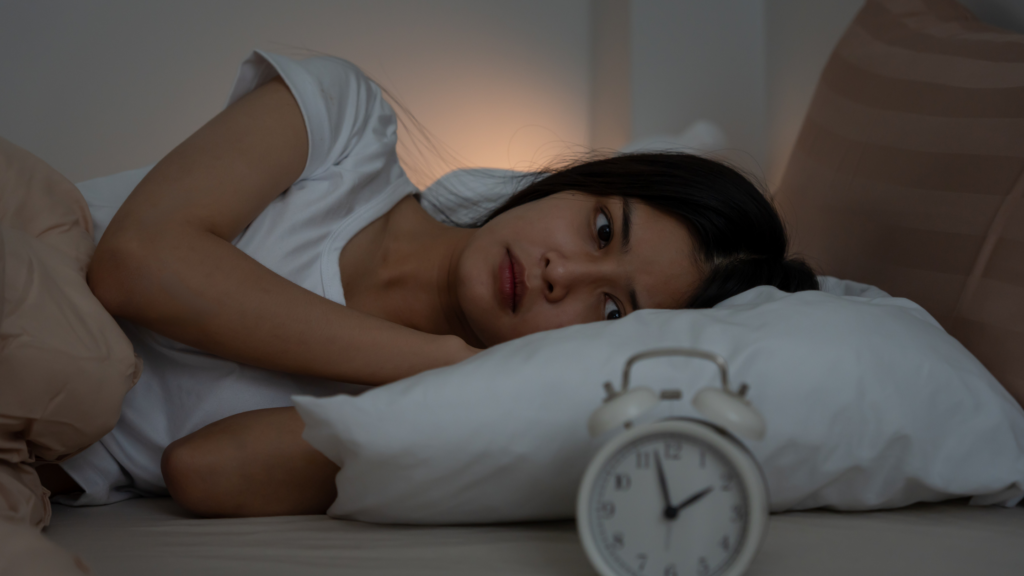
What is the difference between insomnia symptoms and insomnia disorder?
Most people will experience periods of poor sleep.
This may occur:
- during stress
- after illness
- during grief
- with shift work
- during travel
- during major life changes
In these situations, sleep disruption is often directly linked to a clear trigger and usually improves when that trigger resolves.
Insomnia disorder is different.
It involves persistent difficulty falling asleep, staying asleep, or waking too early, despite adequate opportunity for sleep.
Crucially, it also causes daytime impairment.
When does poor sleep become clinically significant?
Clinically, insomnia disorder is usually considered when sleep difficulty occurs at least three nights per week for three months or longer, alongside significant daytime impairment.
This may include:
- reduced concentration
- irritability
- mental fatigue
- poor memory
- low energy
- reduced functioning
Assessment focuses less on a single poor night and more on the broader pattern over time
Can insomnia be a disorder on its own?
Yes.
Historically, insomnia was often seen purely as a symptom of another condition such as anxiety or depression.
Current evidence recognises that insomnia can also function as an independent disorder.
Sometimes sleep difficulty begins during stress but persists long after the original trigger has resolved.
Over time, the brain and nervous system can become conditioned into a state of learned arousal around sleep.
This means the person may feel exhausted, but the body remains alert.
Why do some people feel exhausted but still cannot sleep?
This is one of the defining features of chronic insomnia.
Common experiences include:
- racing thoughts at night
- monitoring the time repeatedly
- heightened awareness of bodily sensations
- frustration about being awake
- anxiety about functioning the next day
This often creates a reinforcing cycle.
The more someone worries about sleep, the more physiologically alert they become.
That makes sleep increasingly difficult.
Is insomnia always caused by anxiety or depression?
No.
Anxiety and depression can certainly contribute to insomnia.
At the same time, insomnia can worsen emotional regulation and increase vulnerability to both anxiety and mood disorders.
The relationship is often bidirectional.
This is why proper assessment usually examines:
- mental health
- medications
- physical health
- substance use
- circadian rhythm
- sleep habits
- nervous system hyperarousal
How does insomnia affect mental and physical health?
Persistent insomnia affects more than energy.
Over time it may contribute to:
- impaired concentration
- irritability
- emotional instability
- reduced stress tolerance
- impaired memory
- reduced productivity
- increased psychological distress
Chronic insomnia is also associated with increased cardiovascular, metabolic, and immune dysregulation over time.
This does not mean occasional poor sleep is dangerous.
The concern is persistent untreated sleep disturbance.
What is the best treatment for chronic insomnia?
Current evidence supports Cognitive Behavioural Therapy for Insomnia (CBT-I) as the first-line treatment for chronic insomnia.
CBT-I addresses the cognitive, behavioural, and physiological factors that maintain insomnia.
Depending on the clinical picture, treatment may also involve:
- addressing psychiatric contributors
- reviewing medications
- improving sleep routines
- managing circadian disruption
- selective use of medication where appropriate
Treatment should be individualised.
When should someone seek professional help?
It may be worth seeking assessment if:
- sleep problems persist for weeks or months
- daytime functioning is affected
- sleep-related anxiety develops
- concentration worsens
- mood becomes unstable
- exhaustion becomes chronic
The goal is to understand what is maintaining the insomnia, rather than simply suppressing symptoms.
Summary
Insomnia becomes more than a temporary symptom when it persists beyond short-term stress and begins affecting emotional, cognitive, and physical functioning. Chronic insomnia is not simply a matter of poor sleep habits or insufficient effort. It often reflects a complex interaction between stress physiology, behavioural conditioning, biological rhythms, and mental health. Accurate assessment allows treatment to be more targeted and more effective.
At Orudra Mindspace, we provide evidence-based assessment and treatment for insomnia, anxiety, mood disorders, and related mental health concerns. Telehealth and in-person consultations are available across Australia.
This article is intended for general informational purposes only and does not replace personalised medical or psychiatric advice.
Frequently asked questions
1. What are common insomnia symptoms?
Common insomnia symptoms include difficulty falling asleep, waking frequently during the night, waking earlier than intended, or feeling unrefreshed despite spending enough time in bed. For some people, the main difficulty is not sleep itself, but the effect poor sleep has on concentration, energy, mood, and day-to-day functioning.
2. How is insomnia disorder different from temporary poor sleep?
Temporary sleep disruption is common during periods of stress, illness, travel, or major life change and often improves once those circumstances settle. Insomnia disorder is different in that the sleep difficulty persists despite adequate opportunity for sleep and begins affecting daytime functioning, emotional regulation, and overall wellbeing.
3. Can anxiety cause insomnia disorder?
Anxiety can certainly contribute to insomnia, particularly by increasing mental and physiological arousal. However, chronic insomnia can also become a self-sustaining condition, where the sleep difficulty continues even after the original stressor has improved. This is one reason proper assessment matters.
4. When should I seek help for insomnia symptoms?
It may be worth seeking professional assessment if sleep difficulties persist over time, begin affecting concentration, mood, or energy, or create ongoing anxiety about sleep itself. Persistent insomnia is often treatable, but the most effective approach depends on understanding what may be maintaining it.